

◆10月のコラム
◆◆自然環境学専攻
◆◆◆穴澤活郎准教授
柏の葉、知のタスキ
タッタッタッ。柏の葉公園の朝は早い。
まだ陽の低い時刻から、
夏休みや冬休み、あるいは春休み、そして土日祝日ともなれば、
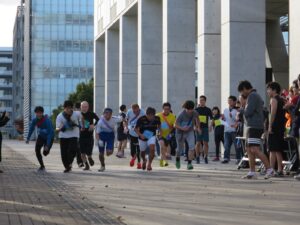
キャンパス内でも時折駅伝大会が繰り広げられる。
学術研究という営みもまた、駅伝によく似ている。
タッタッタッ。今朝も足音は途切れることなく続いていく。
Kashiwanoha: Passing the Sash of Knowledge
Tap, tap, tap. Morning comes early to Kashiwanoha Park.
With the sun still low in the sky, light footsteps begin to gather on the loop path. Tap, tap, tap.
The steady beat of running shoes builds in overlapping rhythms, carrying far through the
lingering stillness. Before the day gets underway, Kashiwanoha Park is a quiet place for
exercise.
During the summer, winter, and spring breaks, as well as on weekends and public holidays,
local ekiden runners—athletes who compete in long-distance road relay races—can be seen
training along this path. Alongside athletes covering the distance with controlled, disciplined
strides, others out training on their own move through the morning air at their chosen pace. My
own footsteps slip in among theirs. As I run along the same path, breathing hard, my footfalls mingling
with those of others, I feel the changing seasons directly on my skin. The crisp air of a winter
morning fills my lungs; in the early hours of summer, the rich scent of greenery hangs in the air.
Here, I experience Kashiwanoha’s four seasons with my whole body.
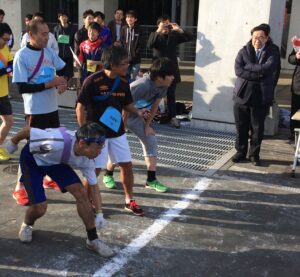
On campus, too, ekiden races are held from time to time. There is a curious power in passing a
single tasuki, the sash worn by relay runners, from one person to the next. Each exchange
carries a clear intention: to pass something on. There is the achievement and relief of finishing
one’s leg, and the taut tension of receiving the sash. As it passes from runner to runner amid
cheers from the sidelines, the runners change, but the rhythm of their footsteps—tap, tap,
tap—never falters. It flows onward like a current with a life of its own.
Academic research, too, is much like an ekiden. There are limits to the distance any one person
can cover in a lifetime, and to the questions they can tackle. Yet we receive the “sash” of data
and knowledge accumulated by our predecessors, run our own leg with all we have, and pass it
on to the next generation. Kashiwa, too, is surely one important leg in this relay of knowledge.
No single hero runs the entire course; knowledge is carried forward without interruption by
countless hands. Quiet though this endeavor may be, it has a steady strength.
Tap, tap, tap. This morning, too, the footsteps continue, unbroken. Once again, the morning at
Kashiwanoha Park offers quiet yet powerful encouragement to someone’s next step—and to the shared
endeavor of carrying something forward into the future.
号砲とともに、第一走者が一斉に走り出す。新領域駅伝大
The gun goes off — first-leg runners break away at the campus
ekiden meet, Kashiwa Campus.